981 Main St West, Hamilton, ON L8S 1A8, Canada.



)
)









This is really scary: fifty three percent of people who look at websites on their phones will leave a page if it takes more than three seconds to load. Mobile site visitors do not like to wait for a time. They will leave if the page takes longer, than three seconds to load. Mobile site visitors are very impatient when it comes to waiting for a page to load on their phones.
If your website gets 1,000 visitors every month, a slow load time can drive away more than half of them before they even see your headline. That means lost opportunities, lost leads, and lost revenue.
Website speed is no longer just a technical detail. In 2026, Google uses speed as a ranking factor. User experience and performance directly impact where your website appears in search results.
If your competitors are ranking higher, your website speed could be the reason. Improving speed is one of the most effective ways to boost SEO, increase engagement, and improve conversions.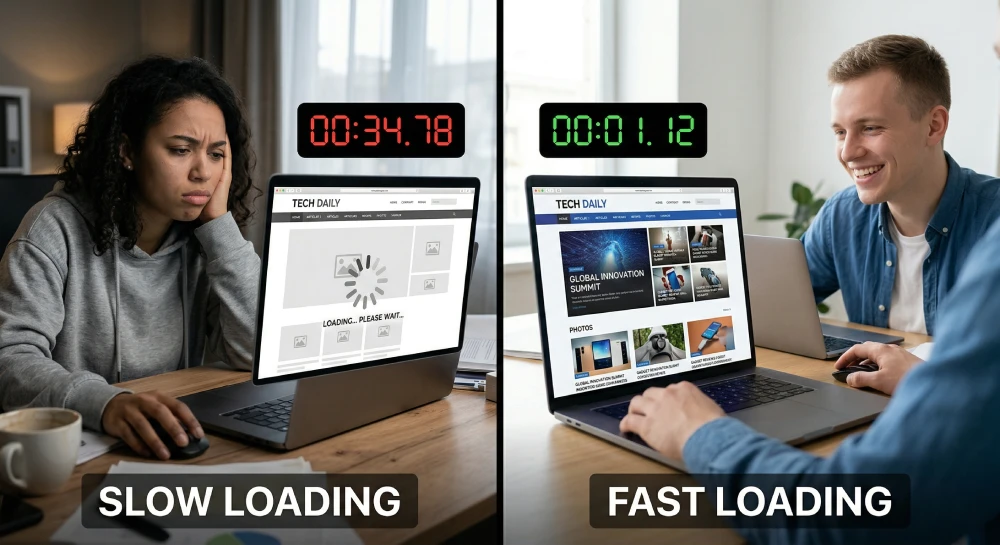
People do not like waiting. A fast-loading website creates a smooth experience, while a slow website frustrates users and increases bounce rates. Speed is not just about performance - it directly affects how users perceive your brand.
Search Engine Optimization (SEO) is about creating a better experience for users, and speed plays a major role in that.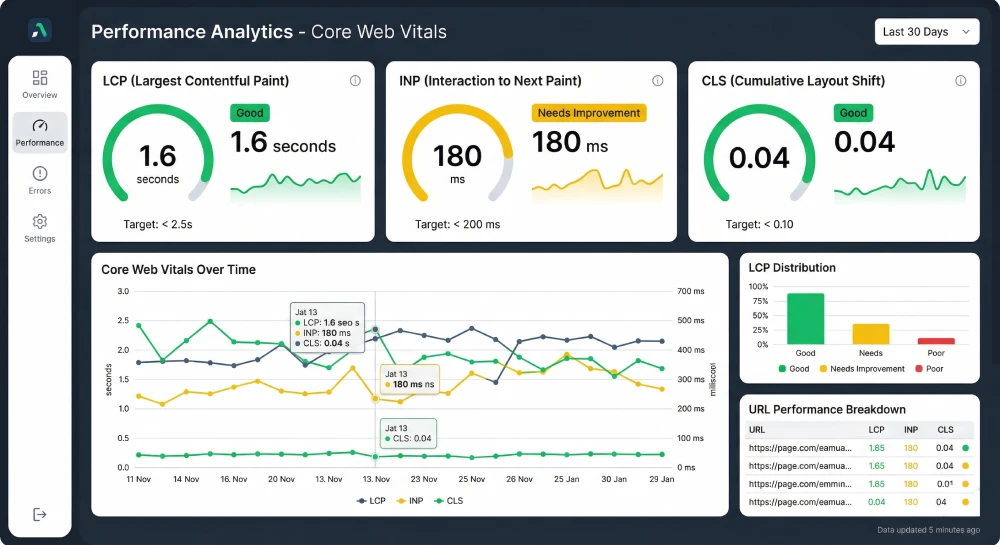
Google measures website performance using Core Web Vitals. Think of them as a performance report card for your website.
What it measures: How quickly the main content of your page loads.
Goal: Under 2.5 seconds
How to improve:
What it measures: How quickly your website responds when a user interacts (clicks, taps, etc.).
Goal: Under 200 milliseconds
How to improve:
What it measures: Visual stability of your page while loading.
Goal: Less than 0.1
How to improve:

A fast website feels professional, secure, and reliable. A slow website feels outdated, broken, and untrustworthy.
Even small delays impact revenue. Studies show that even a fraction of a second delay can reduce conversions. Faster websites consistently generate more sales and better engagement.
Most business owners test their website on a desktop with fast internet. But your customers are using mobile devices on slower networks.
Google primarily uses the mobile version of your website for ranking. If your mobile site is slow, your entire website can be affected - even if your desktop version is fast.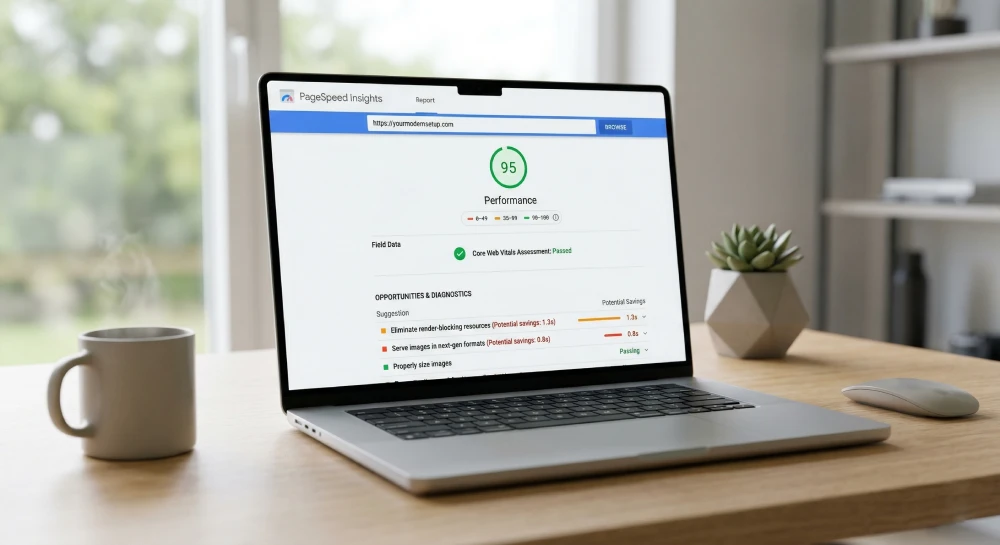
You do not need to guess your website performance. Use these tools:
If your score is in the red (0-49) or orange (50-89), your website needs optimization.

Website redesigns can take months. Rebranding takes weeks. But speed optimization can deliver results in just a few days.
Improving your website speed increases user retention, improves rankings and boosts conversions - making it one of the highest ROI activities for any business.
If your website feels slow, it is time to act. A professional speed audit can identify issues and unlock your website’s full potential.
Ready to improve your website performance? Let our team analyze your Core Web Vitals and optimize your website for speed, SEO and better results.
Get Your Free Speed Audit




(1).png)

.png)
















(2).png)
.png)
.png)


_page-0001 (1) (1).png)













(1)(1).png)





.png)
)
)